자유게시판
- Home
- 고객센터
- 공지사항
고객센터
Cross-Platform Db2 File Viewer: Why FileViewPro Works
페이지 정보

본문
A db2 file commonly acts as a database container, but since .db2 varies from app to app, it could belong to IBM’s database engine or a regular application’s internal DB. IBM Db2 databases break information into containers and logs, so you don’t open one single DB2 file; instead, you use Db2’s management tools. Outside IBM, developers may use .db2 simply as "database," often meaning it’s SQLite disguised by naming. To identify yours, look for the associated program and do a safe header peek for markers like "SQLite format 3" or readable SQL. Surrounding files offer clues too: .wal or .shm suggest SQLite is in play, while mixed system-like files signal an engine-driven structure. A database file is simply a structured way of storing tables so programs can query and update information quickly.
Database files package a mix of data and system structures, including index trees functioning like a book’s index so the system navigates straight to target rows. They also contain constraints and links that protect accuracy. If you adored this information and you would certainly like to get more facts concerning Db2 file online tool kindly visit our web site. Many engines track transactions to recover safely from crashes, which is why databases run through proper tools rather than direct editing. The engine itself guarantees safe updates, making sure changes are completed correctly. Because of all this, a database may be split into pieces—data segments, index files, logs, or temp storage—and a .db2 file can be the main store, a partial component, or a wrapper around another database. IBM Db2 and other server-grade systems break storage into dedicated parts to improve speed, handle heavy logging, and scale without shoving everything into one file.
Db2 lays out data through table spaces, which themselves use containers that may be files, directories, or raw devices, so a database often spans several locations under Db2’s control. Transaction logs are maintained separately to roll back interrupted updates, and these logs may pile up. This multi-file design supports storage optimization, letting admins separate hot from cold data and avoid oversized single files. As a result, a ".db2" file isn’t necessarily the whole database—it could be just a container because Db2 relies on multiple coordinated pieces. What you can do with it varies depending on whether it’s a true Db2 component or a different app’s file, but generally it must be handled as engine-managed data. Practically, you can inspect its origin, open it using the correct software (Db2 tools or SQLite viewers if it’s actually SQLite), run queries once loaded, and export data. If it belongs to a Db2 system, operations like backup or schema review must be done through Db2 utilities with all companion files present.
You normally can’t open a .db2 file by double-clicking since renaming it or editing it in Notepad/Word/hex editors can break structural pages. A single .db2 file also isn’t necessarily a full database when it’s only a single fragment of a multi-file Db2 setup, where missing logs/configs make interpretation impossible. The secure approach is to read, query, and export through the correct engine rather than editing the raw file. Confusion arises because "DB2" may refer to IBM’s Db2 database or simply an extension chosen by another application. With IBM Db2, data lives across multiple internal files accessed through Db2 tools; with non-IBM files, .db2 may be a custom format or even SQLite under a different extension. Thus the real question is whether the file belongs to an IBM Db2 system or is really a custom format, because each path requires different utilities.
".db2" belongs to no one because file extensions function as free-form labels, and OSes don’t limit usage. Developers can freely choose `.db2` to mean anything they prefer. IBM Db2 usually spreads its storage across separate components, so a standalone `.db2` file isn’t automatically Db2-related. Many applications intentionally pick unusual extensions to mask SQLite, often saving SQLite as `.db2`, `.dat`, or `.bin.` So the extension itself doesn’t reveal the truth; only source application does.
IBM Db2 doesn’t rely on a single-file database model because it’s architected for robustness, fast operations, and scalable layouts. Data is placed into logical table spaces, which map to containers that can be files, directories, or raw devices—immediately producing a multi-piece storage design. Separate transaction logs give Db2 the ability to recover after crashes, undo unfinished work, and keep data consistent. This modular approach allows tuning: busy tables can be put on faster storage, large spaces can be spread across drives, and backups can run intelligently. As a result, a Db2 database is a collection of coordinated components rather than a single `.db2` file, so any `.db2` you encounter might just be one container, a backup artifact, or something unrelated depending on context.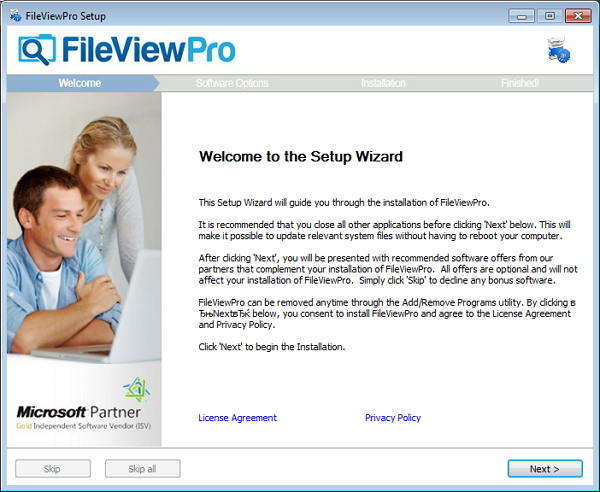
Database files package a mix of data and system structures, including index trees functioning like a book’s index so the system navigates straight to target rows. They also contain constraints and links that protect accuracy. If you adored this information and you would certainly like to get more facts concerning Db2 file online tool kindly visit our web site. Many engines track transactions to recover safely from crashes, which is why databases run through proper tools rather than direct editing. The engine itself guarantees safe updates, making sure changes are completed correctly. Because of all this, a database may be split into pieces—data segments, index files, logs, or temp storage—and a .db2 file can be the main store, a partial component, or a wrapper around another database. IBM Db2 and other server-grade systems break storage into dedicated parts to improve speed, handle heavy logging, and scale without shoving everything into one file.
Db2 lays out data through table spaces, which themselves use containers that may be files, directories, or raw devices, so a database often spans several locations under Db2’s control. Transaction logs are maintained separately to roll back interrupted updates, and these logs may pile up. This multi-file design supports storage optimization, letting admins separate hot from cold data and avoid oversized single files. As a result, a ".db2" file isn’t necessarily the whole database—it could be just a container because Db2 relies on multiple coordinated pieces. What you can do with it varies depending on whether it’s a true Db2 component or a different app’s file, but generally it must be handled as engine-managed data. Practically, you can inspect its origin, open it using the correct software (Db2 tools or SQLite viewers if it’s actually SQLite), run queries once loaded, and export data. If it belongs to a Db2 system, operations like backup or schema review must be done through Db2 utilities with all companion files present.
You normally can’t open a .db2 file by double-clicking since renaming it or editing it in Notepad/Word/hex editors can break structural pages. A single .db2 file also isn’t necessarily a full database when it’s only a single fragment of a multi-file Db2 setup, where missing logs/configs make interpretation impossible. The secure approach is to read, query, and export through the correct engine rather than editing the raw file. Confusion arises because "DB2" may refer to IBM’s Db2 database or simply an extension chosen by another application. With IBM Db2, data lives across multiple internal files accessed through Db2 tools; with non-IBM files, .db2 may be a custom format or even SQLite under a different extension. Thus the real question is whether the file belongs to an IBM Db2 system or is really a custom format, because each path requires different utilities.
".db2" belongs to no one because file extensions function as free-form labels, and OSes don’t limit usage. Developers can freely choose `.db2` to mean anything they prefer. IBM Db2 usually spreads its storage across separate components, so a standalone `.db2` file isn’t automatically Db2-related. Many applications intentionally pick unusual extensions to mask SQLite, often saving SQLite as `.db2`, `.dat`, or `.bin.` So the extension itself doesn’t reveal the truth; only source application does.
IBM Db2 doesn’t rely on a single-file database model because it’s architected for robustness, fast operations, and scalable layouts. Data is placed into logical table spaces, which map to containers that can be files, directories, or raw devices—immediately producing a multi-piece storage design. Separate transaction logs give Db2 the ability to recover after crashes, undo unfinished work, and keep data consistent. This modular approach allows tuning: busy tables can be put on faster storage, large spaces can be spread across drives, and backups can run intelligently. As a result, a Db2 database is a collection of coordinated components rather than a single `.db2` file, so any `.db2` you encounter might just be one container, a backup artifact, or something unrelated depending on context.